
I thought DNA tests were just for people obsessed with family trees. I was wrong, though.
DNA is basically a biological guide. It explains why you’re a total night owl or why a certain workout just isn’t doing the work.
If you’re only checking your ancestry percentages, you’re leaving the best parts of your report on the table.
There are so many things a DNA Ancestry test can tell you that go way beyond where your ancestors lived.
Whether you’re about to take your first test or you already have your results sitting in an app, we’ll talk about the info that actually matters for your daily life.
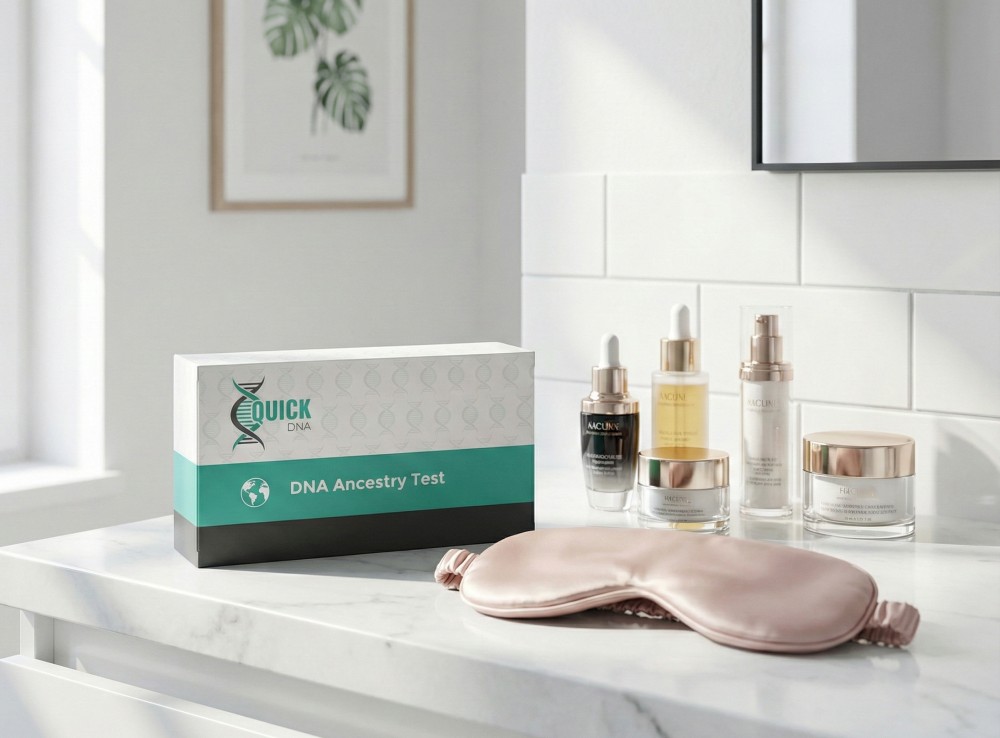
Table of Contents
1. Red flags about your health
The health part is the most nerve-wracking, but the most helpful. Modern kits look for markers found in conditions like late-onset Alzheimer’s, Parkinson’s, and the BRCA1 or BRCA2 genes.
Actor Chris Hemsworth discovered he has two copies of the APOE4 gene that increases the risk for Alzheimer’s. Instead of worrying, he used that knowledge to change his lifestyle.
Having a gene is different from having a disease. Having a genetic variant for a disease does not mean you’ll get it. It just means you have a higher statistical risk.
Like a weather report, a 60% chance of rain doesn’t mean you’re definitely getting wet, but you might want to carry an umbrella, just in case.
Don’t panic if your report shows a red flag. Your next step should be talking to a doctor for a medical-grade test to confirm things.
2. How you react to meds
Your body’s DNA can tell you how it reacts to medicine. It’s called pharmacogenetics. Genes control how fast or slow your liver breaks down drugs. This is huge for antidepressants, blood thinners, or chemotherapy drugs. It helps your doctor find the right dose without months of trial and error.
3. Carrier status
You might be a carrier of a condition like cystic fibrosis or Sickle Cell Anemia.
Carriers don’t have the disease themselves, so you’ll never know without a test. But if both parents carry the same variant, 25% the chance is their child could be born with the condition.
Couples can use this data for family planning and early medical help. This piece of information can feel heavy but gives you the power to make the best choices for your future kids.
4. Raw data can tell you more
You can actually download your raw data file. This is a giant text file of your A, C, G, and T markers.
You can take this file to third-party sites like Promethease or SelfDecode, where they cross-reference your markers with thousands of medical studies to get a better idea of your health profile.
It might be slightly more technical, but it shows you far more than the basic reports you get in the app.
5. Cause of sensory quirks
Do you despise the taste of cilantro? You can blame the OR6A2 gene. About 10% of people have a variant that makes cilantro taste like a bar of soap.
Another fun one is the Photic Sneeze Reflex. If you sneeze the second you walk into the sun, that’s an inherited trait about 25% of the population shares, including Aristotle. It has a funny name: ACHOO syndrome.
But the quirks don’t stop there. Notice a weird smell after eating asparagus? Only some people have the genetic mutation that lets them detect sulfurous products in their urine.
There’s also the bitter gene (PTC). If you find broccoli or kale unbearably bitter, you likely have the taster version of this gene.
Even your earwax type—wet or dry—is decided by a single letter in your DNA code. Your genes explain these tiny, weird things about you that you probably thought were just your own personality.
6. Determines how you age
Your genes can predict how your skin will age over the years. They also:
- Show how your body produces collagen to determine how likely you’ll develop sun spots, freckles, or early wrinkles.
- Cover traits like hair texture or the risk of early thinning.
- Tell how sugar affects your skin’s elasticity.
- Influences how your skin reacts to pollution and stress.
7. Fitness and diet
Your DNA can tell which workouts will give you the best results.
The ACTN3 gene tells you if your muscles are built for power, like sprinting and heavy lifting, or endurance, like long-distance running.
If grinding at the gym isn’t getting you results, your body might be built for a different style of movement.
Results also show how your body handles caffeine. Fast metabolizers can drink a double espresso at 9 PM and sleep like a baby. Slow metabolizers feel jittery for eight hours.
This makes sense why your gym buddy makes more progress on a certain plan while you do better on another! Even tells you if you’re prone to vitamin deficiencies, so you can adjust your diet.
8. Your sleeping patterns
If you struggle to wake up early, maybe it’s not laziness. Your DNA influences EVEN your circadian rhythm.
Some people are naturally wired to be early birds, while others are naturally night owls.
Knowing your natural chronotype can help you schedule your most difficult tasks for when your brain is actually awake.
It’s a relief to know that your struggle with 7 AM meetings could be genetic. So, instead of fighting your nature, you can align your schedule with your biology for better energy.
9. Your ancient origins
Ethnicity percentages tell you where your ancestors were 200 years ago. Deep Ancestry tells you where they were 20,000 years ago.
By tracking haplogroups, which are direct male or female lines, you can see the exact path your ancestors took out of Africa 60,000 years ago.
Most people with roots outside of Africa also carry 1-4% Neanderthal DNA. These ancient bits of code still influence you today. They affect your immune system, your skin, and even how you feel pain. Definitely a cool way to feel connected to the very beginning of human history.
10. Finding a new family
The most exciting part of a DNA test is the relative match database. DNA companies use a measurement unit called a centimorgan (cM) to show how much DNA you share with a match.
- 3,500 cM: Parent/child or identical twin.
- 800–1,700 cM: First cousin or grandparent.
- ~20 cM: Very distant cousin (likely 4th or 5th).
These tests can find long-lost siblings or cousins. Many cases exist where people have discovered they were switched at birth or found siblings they never knew existed.
Now, which kit should you actually get?
Endless options make it so overwhelming. Each company has a slightly different focus, so the best one really depends on what you want to find out.
For the family tree obsessed: AncestryDNA
If your main goal is to build a massive family tree and find long-lost cousins, pick AncestryDNA. With the largest user database, there’s a higher chance of finding matches. Their huge records database helps you link your DNA results to actual paper records like birth certificates and ship manifests.
For the health buff: 23andMe
We’d recommend 23andMe if you’re more interested in health reports and traits than finding your third cousin. They were the first to get FDA clearance for many of their health reports. Their app is also well-made and easy to use. However, it’s pricey, especially if you want the ancestry and health packages.
For global roots: MyHeritage
If you have strong European ancestry, MyHeritage is for you. Their massive user base in Europe can help you find matches that might not be on US-focused sites. They also have some cool photo-editing tools to animate your old family pictures.
The best all-rounder: QuickDNA
If you want a test that gives you a solid mix of ancestry and traits without blowing your budget, I highly recommend the QuickDNA Ancestry Test. Most big companies sell your data to pharmaceutical giants, but QuickDNA prioritizes privacy. It’s built for those who want clear, actionable results without the jargon. It’s accurate, affordable, and gives you deep insights into your quirks without feeling like you’re paying for extra features you’ll never use.
Ready to find your own secrets? You can grab your QuickDNA kit here to get started on your own exploration.
What Should You Know Before Using a DNA Ancestry Testing Kit
Before you spit in a tube, there are things the box doesn’t mention. Testing is fun, but surprises await.
Secrets surface
DNA tests find family secrets. You might find out your dad isn’t your biological father or that you have a half-sibling living two towns away. Once you know, you can’t un-know it. Think about that before you join the relative matcher.
Estimates change
Your ancestry report is not final. DNA companies compare your sample to groups of people living in those areas. As they get more data from more people, your results will update.
You might one day see your 15% German has shifted to 12% French. This doesn’t mean the test was wrong, but simply that science got better at telling similar regions apart. A genetic test’s accuracy keeps changing.
Sibling differences
You and your siblings might get different results despite having the same parents. This happens because you only get half of each parent’s DNA.
It’s random which part you get. One child might inherit all Irish traits while the other gets mostly Italian ones. It’s a genetic lottery, so don’t be shocked if your sister looks more Scandinavian on paper than you do.
Insurance gaps
There’s a law in the US called GINA that protects you from health insurance companies or employers using your DNA against you. However, it doesn’t cover life, disability, or long-term care insurance.
These companies might ask if you have taken a genetic test, and insurers can still use your results to hike your rates or deny coverage.
Bottom line
Your DNA results are more than an icebreaker for your next dinner. They’re a manual for what makes you you. One of the most important things a DNA Ancestry test can tell you is how to use your unique genetic code to build a better daily routine.
Ethnicity reports are fascinating, but the real value lies in what you do with the data to live better today. Pick a kit that focuses on these personal details before you get started. A simple test from QuickDNA makes it easy to find those answers with little stress.
Treat your results as a personalized guide for your skin, your sleep, and your health. Stop guessing and start doing what actually works for your body.
